
The Future Is Bright, and the Future Is Very Much Biotechnology.
Aroma Biotech, Industrial Biologization Partner
An enzyme is alive, and living products lose value in transit
Enzymes shipped from Europe cost more, carry a higher carbon footprint, and arrive weaker than they left.

- Aroma Biotech develops, manufactures, and sells enzyme products for soil, crops, water, and food.
- Company-owned fermentation, manufacturing, and storage in Japan and Vietnam.
- Led by Dr. Duong Qua Aita, PhD in Agriculture, University of Tokyo. Commercial since 1994.
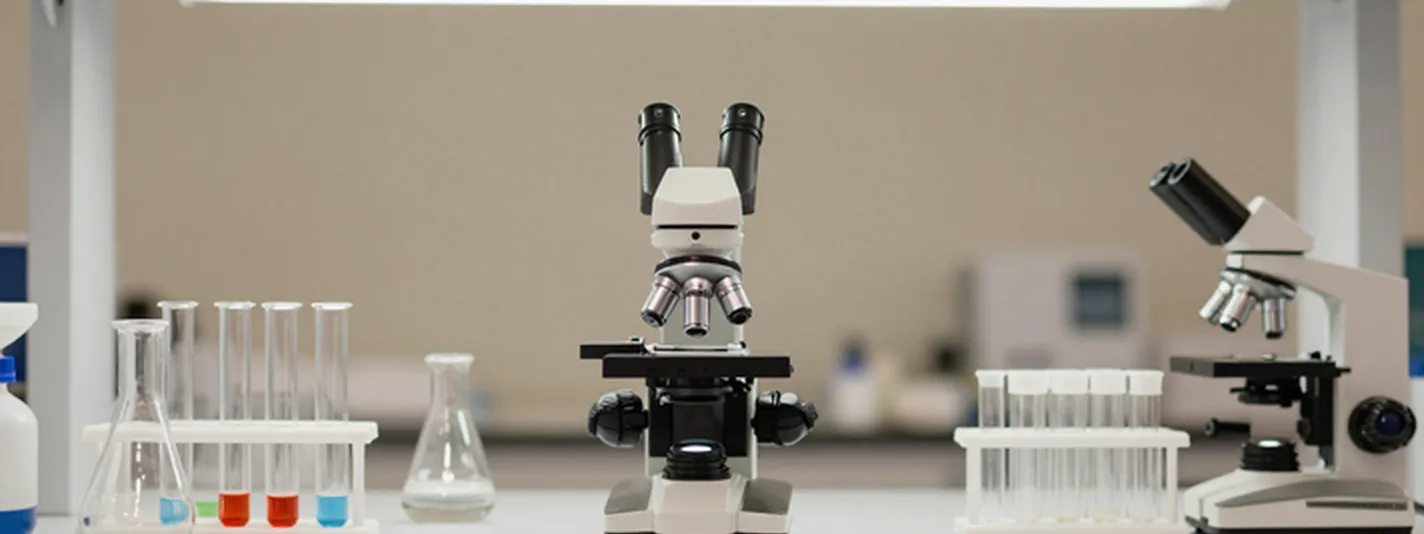
The fit problem
A strain grown for nothing in particular does less work
Distance is the first tax on an imported enzyme; generic fit is the second. A strain cultured in a European lab, with no DNA adjustment for the target it will meet, does less work than one Aroma builds for the job.
-
Distance
A live enzyme degrades on the way from a European lab to a field in Binh Thuan. The buyer pays freight, carbon, and lost activity.
-
Fit
A catalog strain meets soil, pond water, effluent, and protein with the same enzyme. Each project at Aroma gets a strain adjusted at the DNA level for the work it has to do.
Japan and Vietnam
Company-owned fermentation in two countries
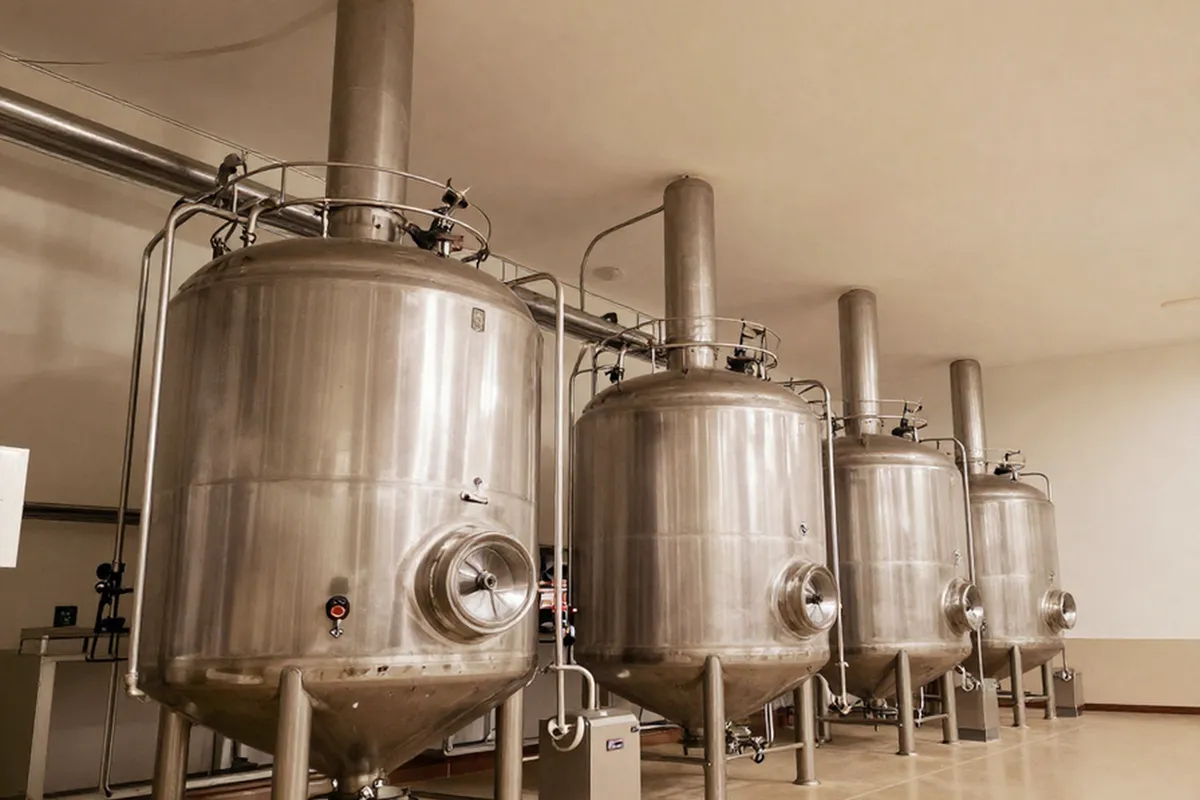
Aroma owns its fermentation, manufacturing, and storage facilities in Japan and Vietnam: Japan handles R&D and high-precision production, and Vietnam handles volume from the plant at Phan Thiet. Producing next to the fields and ponds that use the product lowers cost and carbon footprint, and shortens the distance a live enzyme has to survive.
- Japan R&D and high-precision production
- Phan Thiet Fermentation, manufacturing, storage
- Imported enzyme, live product in transit
- 1994 Vietnam operation running since Founded as an FDI entity around fish sauce production.
- 1996 Phan Thiet factory constructed Fermentation, manufacturing, and storage on one site.
The work
Soil remediation, bio-fertilizer, wastewater treatment, food and medical enzymes
Four service areas, in the order the company sells them. Each one puts a biological process where a chemical one used to be.
-
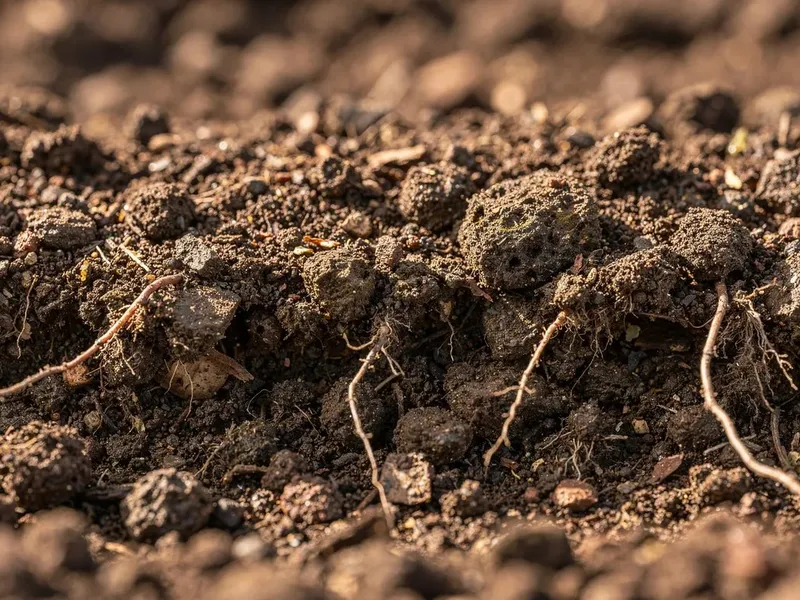
Soil remediation
Degraded ground brought back to a working microbial population.
- Neutralizes pesticide and agrochemical residue
- Balances soil pH and reduces acidity
- Restores the microbial population heavy fertilizer strips out
- Decomposes insoluble organic matter and loosens soil
- Destroys roundworm eggs and fungal spores
Six times faster remediation than conventional methods, on the company's own figure.
-
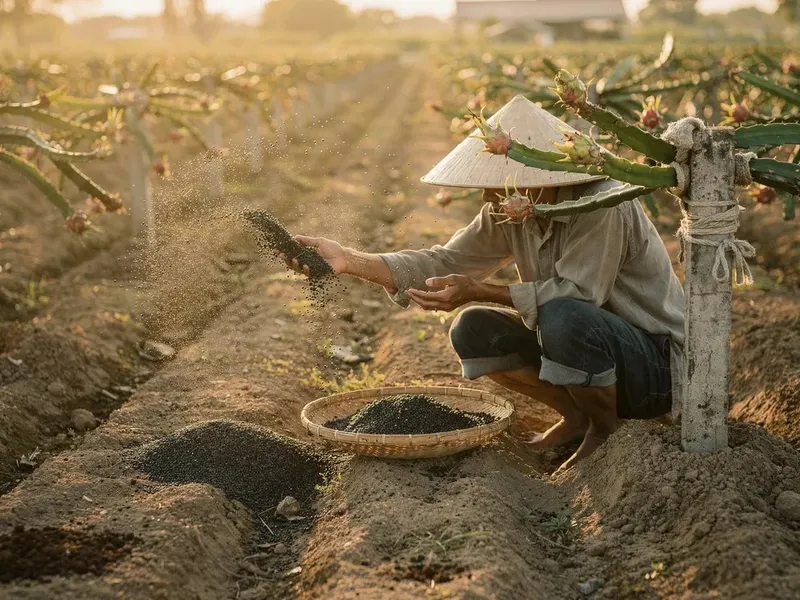
Bio-fertilizer
Carbon, nitrogen, and microbial activity returned to the root zone.
- Activates soil phosphorus and improves nutrient absorption
- Expands root foraging scale and root surface area
- Substitutes in part for chemical fertilizer
- Supplies carbon and nitrogen sources
- Promotes microbial growth and soil enzyme activity
Nitrogen and phosphorus uptake increase and yield responds, on the company's description. Aroma has not published a quantified figure for this effect.
-

Wastewater treatment
Named contaminants reduced in ponds, farms, and plant effluent.
- Reduces NH3, NO2, H2S, and petroleum
- Eliminates toxic gas in shrimp and fish ponds
- Treats livestock waste from pig, cow, and chicken farms
- Waste odor treatment
- Chemical plant effluent
Cassava, rubber, and chemical plant wastewater run on the same formulations.
-
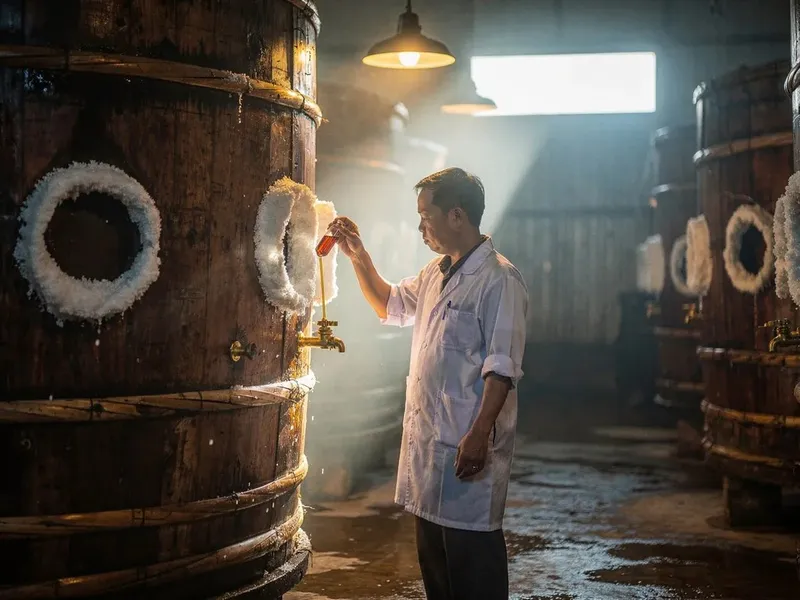
Food and medical enzymes
Forty years of fermentation science, sold as product.
- Okami Food Industrial Prize of Japan, 2006
- Coenzyme Q10 at commercial mass production
- Premium Aroma fish sauce, fermented at Phan Thiet
- Quality control by pasteurization, microbial testing, and histamine monitoring
- Dr. Miwa, CEO, former Ajinomoto researcher with patents in amino acid fermentation
Peer-reviewed in the Canadian Journal of Microbiology (1981) and Nihon Suisangakkai (1986).
The research record
Dr. Duong Qua Aita, PhD in Agriculture, University of Tokyo
The company's enzyme work starts in a journal. In May 1981, Dr. Duong Qua Aita published the purification and properties of a halophilic protease from a moderately halophilic marine Pseudomonas in the Canadian Journal of Microbiology, 27(5) 505. He applied that protease to fish sauce processing in Nihon Suisangakkai 52, 1581, in 1986. The Vietnamese business grew out of that second paper.
1984 to 1987. Genetic engineering of protease DNA in Bacillus amyloliquefaciens.
19802008
Manufacturing
The Phan Thiet factory and the Master Cells Bank
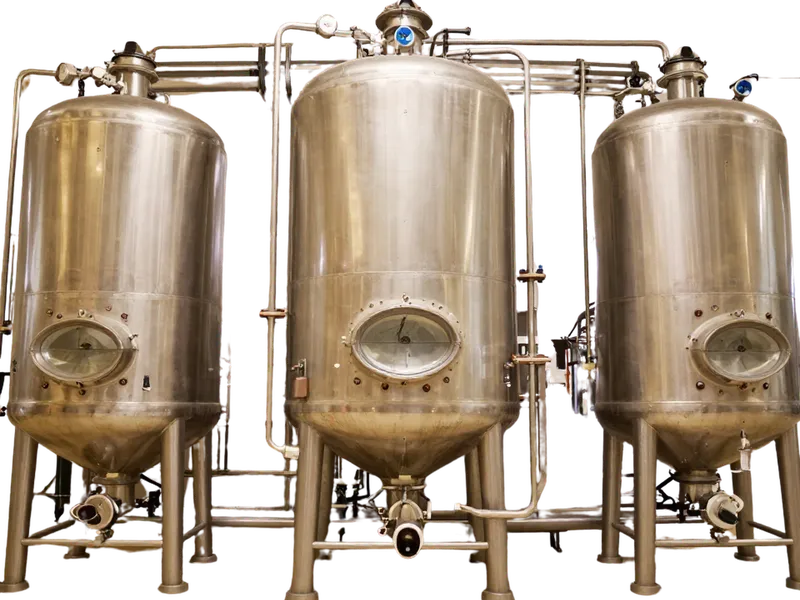
Aroma runs the whole sequence in house, from R&D through fermentation and formulation to a commercial product. The Master Cells Bank stores the strains the custom work depends on. Quality control covers pasteurization, microbial testing, and histamine monitoring.
-
R&D
Strain selection and DNA adjustment for the target.
-
Fermentation
Company-owned vessels in Japan and Vietnam.
-
Formulation
Custom strains and off-the-shelf products on the same line.
-
Commercialization
Pasteurization, microbial testing, histamine monitoring.
On site
What the plant runs
- End-to-end capability from R&D to commercialization
- Master Cells Bank strain storage, so a repeat order repeats the strain
- Japan facilities for R&D and high-precision production
- Phan Thiet, Vietnam, for fermentation, manufacturing, and storage
Since 1986
From the Doi Moi call to the 2025 expansion plan
Under Doi Moi in 1986, Vietnamese diplomats in Japan asked talented people of Vietnamese origin to return and develop the country. Eight years later the company was founded in Vietnam on laboratory enzyme research.
- Doi Moi. Vietnamese diplomats in Japan call for people of Vietnamese origin to return and develop the country.
- An FDI entity founded in Vietnam to produce high-quality fish sauce. The Vietnam operation has run since.
- Factory constructed in Phan Thiet, Vietnam.
- First batch exported to Japan.
- The food business takes the Okami industrial prize in Japan.
- Plan to expand enzyme production in Vietnam and approach agriculture groups globally.
Market size, company estimates
The four markets Aroma sizes
The figures below are Aroma's own estimates of the markets it sells into. They come from the company rather than from independent research.
-
USD 50bn+ Wastewater treatment Company estimate.
-
USD 12–15bn Global enzyme market Growing 6 to 8 percent a year. Company estimate.
-
USD 10bn+ Soil remediation Company estimate.
-
USD 3–5bn Bio-fertilizer Growing more than 12 percent a year. Company estimate.
Diligence
Ask for what this page does not carry
This site publishes what the company can evidence, with dates and citations attached. Customer names, revenue, headcount, patent numbers, certification bodies, and third-party test reports sit outside it. Readers who need those should write to the company directly.
- Vietnam Phan Thiet. Fermentation, manufacturing, storage.
- Japan R&D and high-precision production.